1. Fragmented Day-To-Day WorkflowEvery front desk task lives in its own interface, forcing staff to jump between multiple screens for routine work.
2. "Where Do I Start?"Staff have no fast way to tell which patients are truly time-sensitive versus which can wait.
3. Patient Outreach Was All ManualResolving a task meant personally calling or texting a patient — writing each message from scratch.
4. Missing Patient Signatures Holding Up ClaimsMissing and expired signatures are one of the most direct causes of claim holds — not just an administrative gap.
110,000
Privacy and consent forms created in athenaOne, avg 10 forms per practice
$14,000
Annual printing cost per client, and many hours of printing/collecting/tracking
1,200,000
Claims hold volume in 2024 due to missing and expired patient signatures
Vision
a consolidated, prioritized task list where front-desk staff can find, understand, and resolve patient tasks — with AI surfacing what matters most and drafting the outreach, so staff can spend their time on judgment calls and real patient care.
A Foundation, Not A One-Off
V1 starts with the highest-impact use case: patients with missing or expired privacy and consent form signatures — it's built as the base layer for a broader patient-task work-management experience, with room to grow with other task types including insurance collection, check-in, check-out, appointment scheduling, pre-authorization, and follow-up, etc.
Patient Task List Foundation – Form Use Case
One Queue Instead of Multiple Tools
Replaces the ad-hoc combination of QuickView, Eligibility, Phone List, and third-party tools with a single, purpose-built task list.
Patient Task List
377 total tasks active
AI Daily SummaryAI
Auto-Messaging ReviewAI
Export CSV
MM-DD-YYYY
to
MM-DD-YYYY
MM-DD-YYYY
Dr. Alex Carter
All Departments
All Types
Needs Attention, Pending Patient Reply
Active:Provider: Dr. Alex Carter ✕Status: Needs Attention ✕Status: Pending Patient Reply ✕Clear all filters (3)
Apply Filters
Showing 1–50 of 377 patients
Bulk Action
Search
Configure Columns
Task
Patient Name
Next APPT
Last APPT
Status
Actions
View Details
✕
Patient Details
Legal nameEmma Wilson
Patient ID2124
DOB1990-01-01
Primary contact nameAllison Wilson
Mobile phone(555) 333-6666
Home phone(222) 111-9999
GuarantorSelf
Insurance subscriberSelf
⚠Confidential Communication Note: Do not call patient's home number to communicate medical information.
Form Details
Form NameStatusStatus DetailLast OutreachImpact
Release of Billing InformationNeeds AttentionSignatures expired: 07-22-2025--⚠Hold claims
Assignment of BenefitsPending Patient ReplySignatures expired: 07-22-202504-20-2026 7:00AM⚠Hold claims
Financial Responsibility PolicyNeeds AttentionNo signature on file--⚠Hold claims
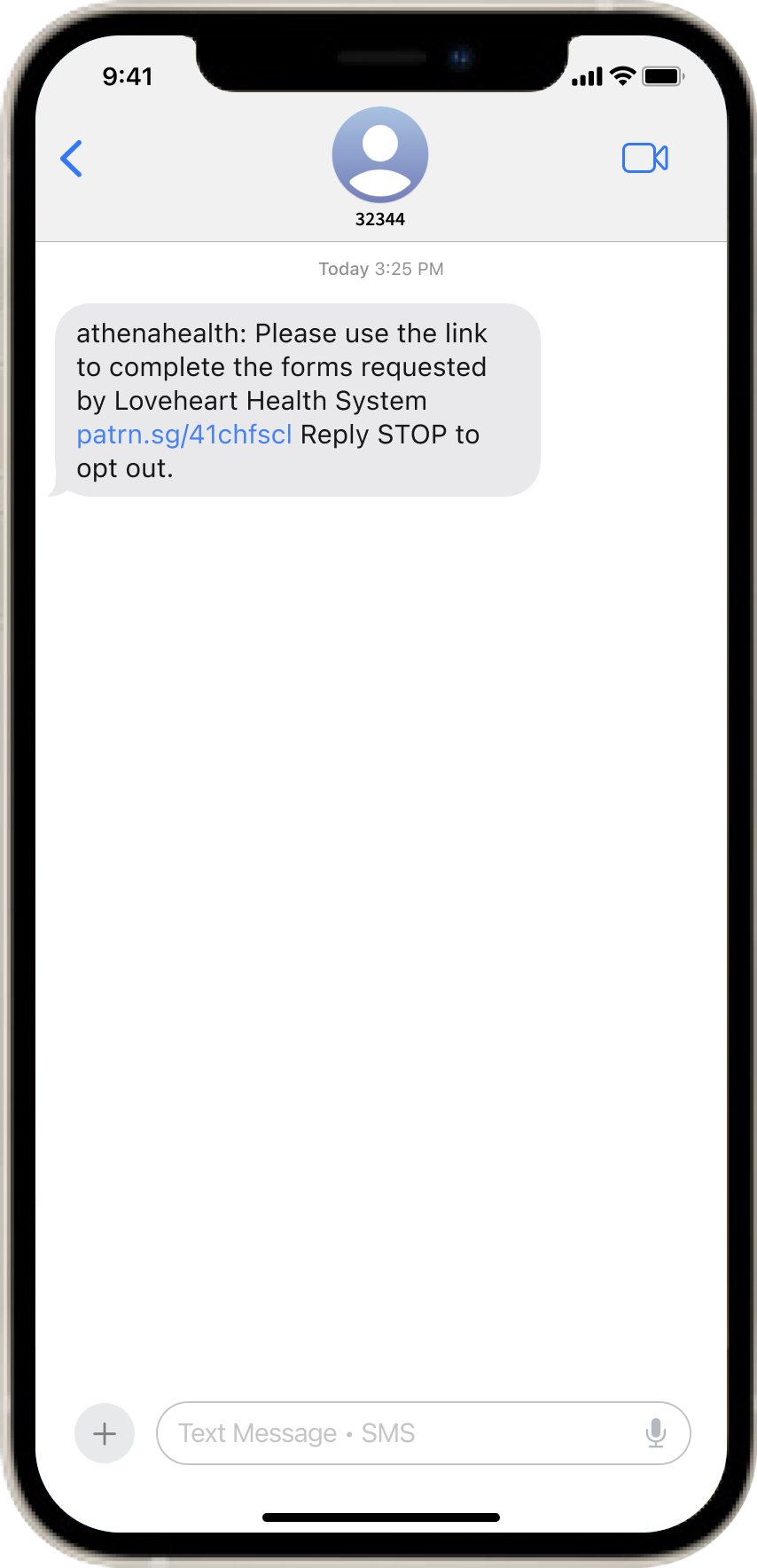
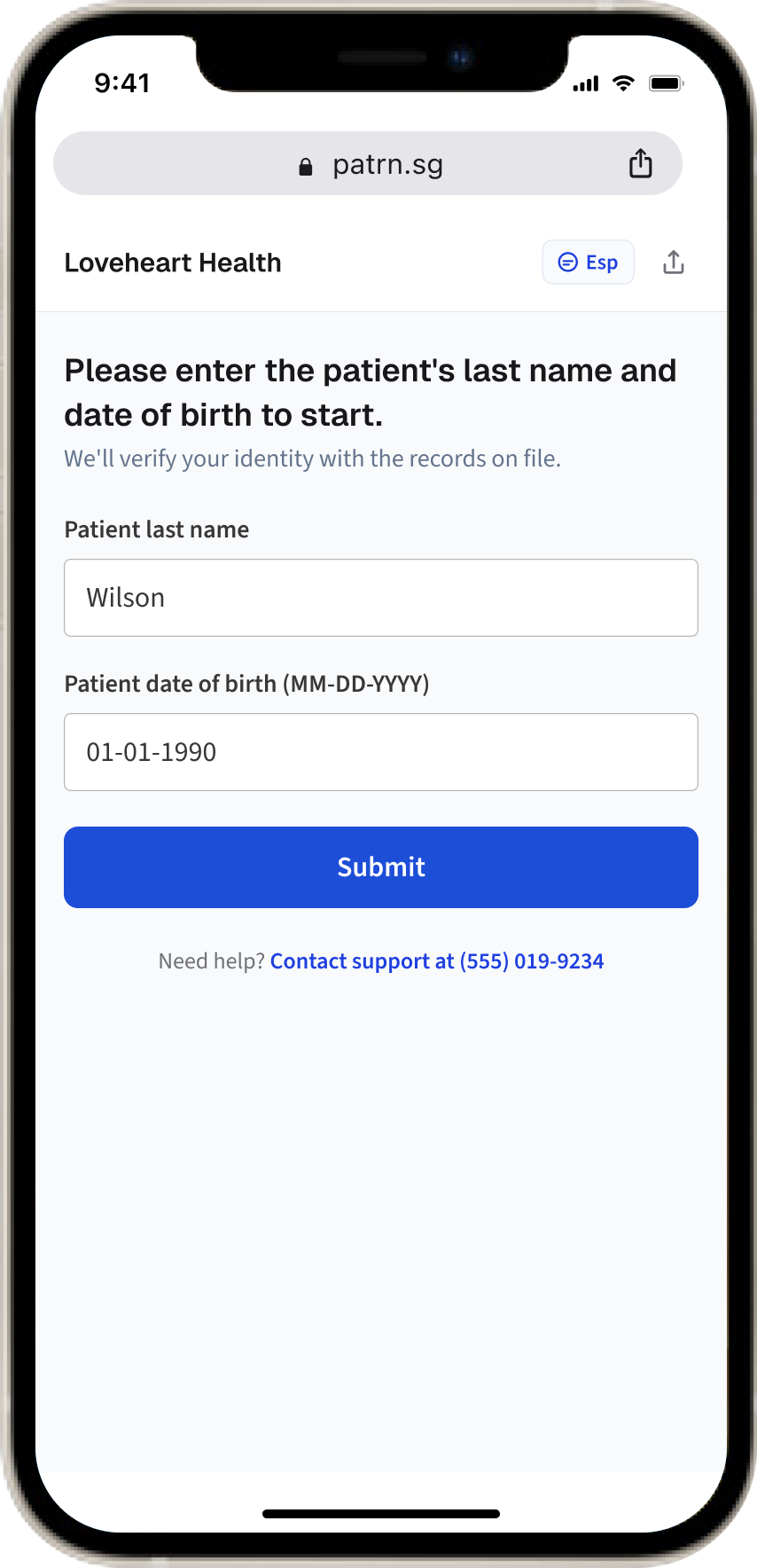
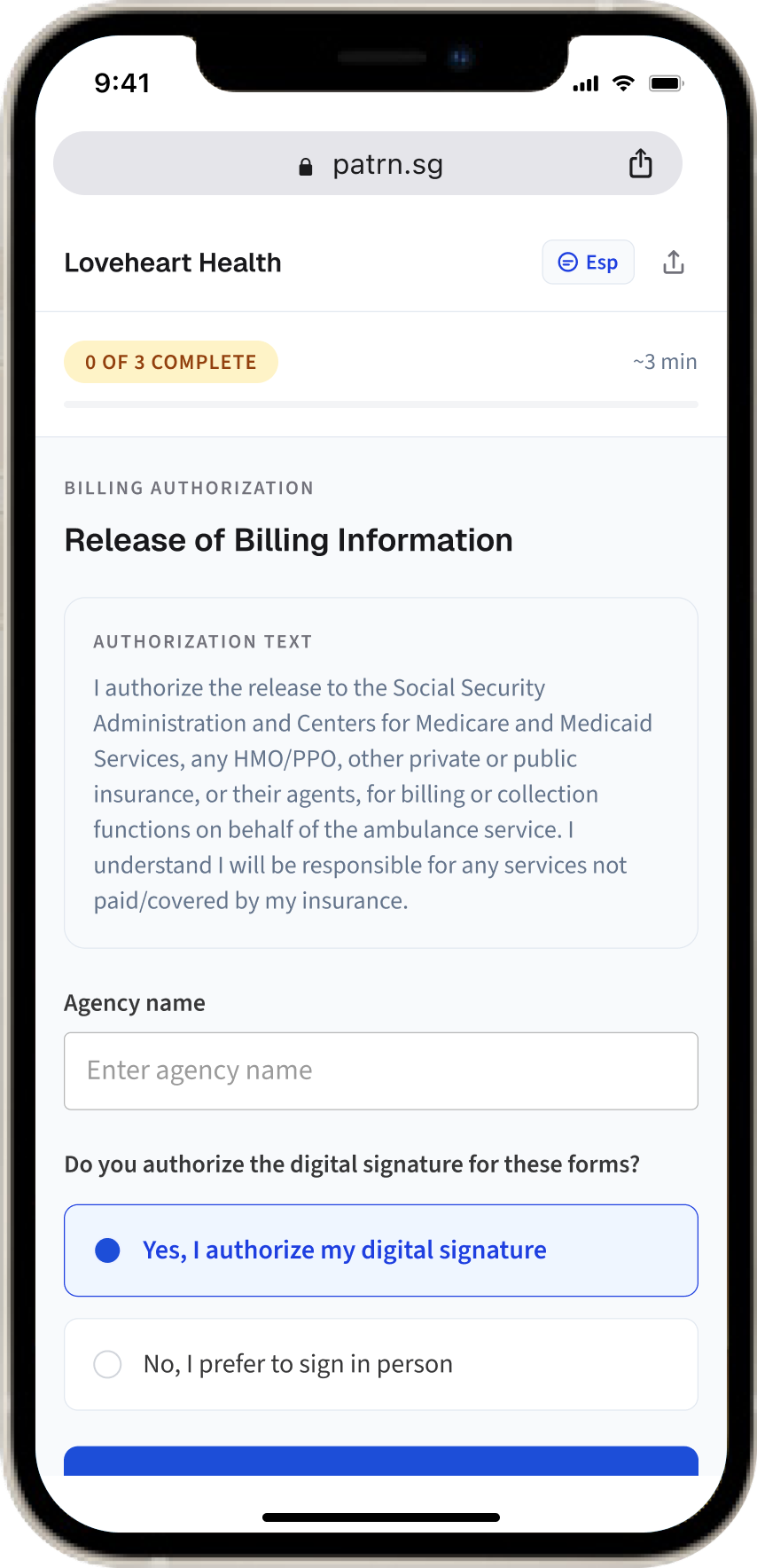
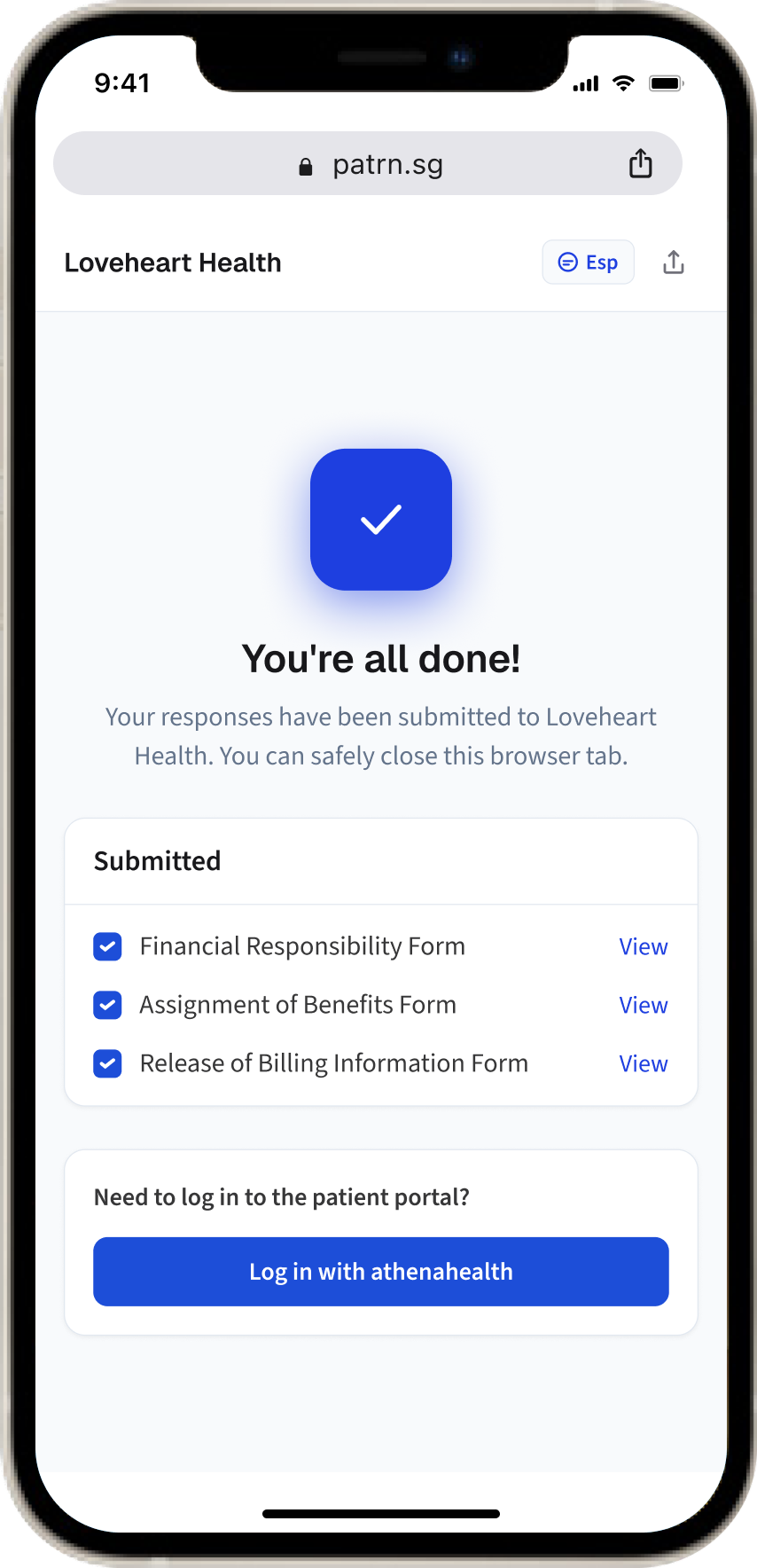
Patient-Facing Form Completion Workflow
AI Enhancement 1 – Daily Summary
Minutes, Not Scanning Hundreds of Rows
AI Daily Summary turns hundreds of open tasks into a three-tier briefing — staff open the list already knowing where to start instead of scrolling and cross-referencing appointment times themselves.
Patient Task List
377 total tasks active
AI Daily SummaryAI
Auto-Messaging Review (0)AI
Export CSV
AI Daily Summary
Generated for Dr. Alex Carter · Wednesday, Aug 20 2025
377 tasks active
You have 9 patients with open tasks today across forms, insurance, and outreach. Here's what to prioritize:
high priority
EWSCJP
3 patients
Forms must be completed before morning appointments today
Emma Wilson (9:00 AM - Wellness Visit)
Sarah Chen (10:15 AM - Follow-up Visit)
Lisa Anderson (4:30 PM - Vaccination/Immunization)
medium priority
SCMT
2 patients
Insurance issues requiring same-day resolution
low priority
EWJPMT
3 patients
Pending patient reply — outreach sent, no response yet
AI Auto-Messaging drafts personalized, appointment-aware messages for every selected patient at once, so sending five tailored reminders takes about as long as writing one used to.
Post-GA Impact
4.3/5
Feature Satisfaction
From 412 responses, #1 Highest-rated among 70+ Tier 1 feature during 2026 summer release
$10M
Reduction
In claim holds due to missing patient form signature
"The new patient task list has been very helpful, it gives you all patients that need items completed in a single list."
Patient Task List
377 total tasks active
AI Daily SummaryAI
Auto-Messaging Review (3)AI
Export CSV
AI Daily Summary
Generated for Dr. Alex Carter · Wednesday, Aug 20 2025
377 tasks active
You have 9 patients with open tasks today across forms, insurance, and outreach. Here's what to prioritize:
high priority
EWSCLA
3 patients
Forms must be completed before morning appointments today
Emma Wilson (9:00 AM - Wellness Visit)
Sarah Chen (10:15 AM - Follow-up Visit)
Lisa Anderson (4:30 PM - Vaccination/Immunization)
medium priority
SCMT
2 patients
Insurance issues requiring same-day resolution
low priority
EWJPMT
3 patients
Pending patient reply — outreach sent, no response yet
MM-DD-YYYY
to
MM-DD-YYYY
MM-DD-YYYY
All Providers
Emma Wilson, Sarah Chen, Lisa Anderson
All Types
Needs Attention, Pending Patient Reply
Active:Patient: Emma Wilson Patient: Sarah Chen Patient: Lisa Anderson Status: Needs Attention Status: Pending Patient Reply Clear all filters (5)
"Hi Emma, your appointment is tomorrow at 9:00 AM with Dr. Alex Carter. Please use the link to complete your patient intake forms before your visit to save time. patrn.sg/41chfscl."
JP
James Park
Approved
Patient Form RequestAppt: 08-20-2025 2:00 PMviaText (866 222-5555)
"Hi James, we need updated patient forms on file before your upcoming appointment on 08-20. Please use the link to complete them at your convenience. patrn.sg/41chfscl"
"Hi Julia, a reminder to use the link to complete your patient forms before your appointment on 08-21 at 11:30 AM. Forms are due 24 hours prior. patrn.sg/41chfscl"
Auto-Messaging Review
AIAI drafted messages for selected patients based on their appointment info and task details. Review before sending
2 auto messages have been sent to:
James Park via Text (866 222-5555)
"Hi James, we need updated patient forms on file before your upcoming appointment on 08-20. Please use the link to complete them at your convenience. patrn.sg/41chfscl"
Julia Martinez via Text (842 555-8888)
"Hi Julia, a reminder to use the link to complete your patient forms before your appointment on 08-21 at 11:30 AM. Forms are due 24 hours prior. patrn.sg/41chfscl"
Patients will receive a secure link to complete and submit these forms before their upcoming appointment. Responses will appear automatically in the task list.